
Lugano, Switzerland – October 2026
Preparing mining projects for international partnerships through technical assessment, transparency and cross-border cooperation.
Peru’s Mining Potential and the Challenge of International Investment
Peru is one of Latin America’s most established mining countries, with significant mineral resources, a long mining tradition and opportunities across exploration, mine development, mineral processing and industrial services.
However, the existence of valuable mineral resources does not automatically translate into successful international investment.
For mining projects seeking international partners, the ability to demonstrate technical credibility, legal clarity, operational feasibility and financial transparency is often as important as the geological potential itself.
Transforming a promising mining asset into an investment opportunity requires a structured approach that brings together technical specialists, project owners, legal advisers, commercial partners and potential investors.
In this context, cooperation between Peru and Switzerland can provide a framework for connecting mining opportunities with international expertise and business networks.
Beyond Geological Potential: Preparing Projects for Investment
International investors assess mining projects according to a broad range of criteria.
The geological characteristics of a deposit are fundamental, but they represent only one part of the overall evaluation.
Depending on the project’s development stage, investors may also examine:
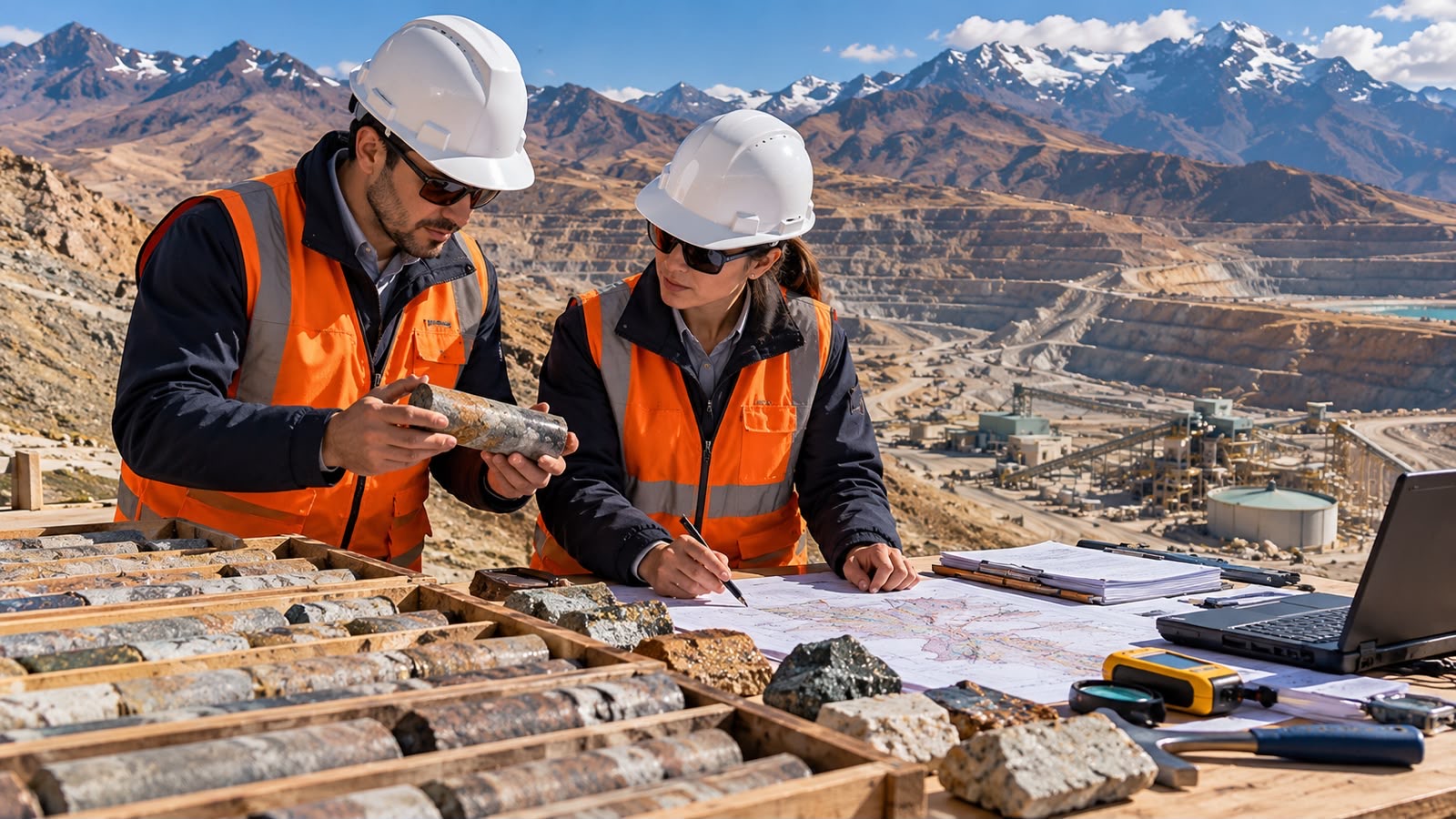
- Geological and technical information: available drilling data, sampling results, resource estimates and independent technical assessments.
- Legal ownership and concessions: verification of concession rights, corporate ownership, licences and applicable obligations.
- Operational infrastructure: access to roads, electricity, water, processing facilities and other essential services.
- Production and processing: existing capacity, recovery rates, operating costs and the feasibility of proposed development plans.
- Environmental and social considerations: applicable permits, environmental obligations, community relationships and responsible operating practices.
- Financial requirements: capital expenditure, operating expenditure, working capital and realistic production scenarios.
- Commercial strategy: potential buyers, offtake arrangements, logistics and access to international markets.
The relevance of each criterion depends on the nature and maturity of the project.
An exploration asset, a producing mine and a project requiring a new processing plant will have different technical, financial and operational requirements.
A clear understanding of these differences helps project owners identify the most appropriate partners and determine which information must be available before an investment decision can be made.
Switzerland as a Platform for International Business Cooperation
Switzerland has an internationally connected business ecosystem that includes financial services, commodities trading, engineering, professional advisory services and international commercial networks.
These capabilities can be relevant to mining projects seeking to establish relationships with international counterparties.
Potential areas of cooperation include project evaluation, corporate structuring, commercial negotiations, industrial equipment, processing technologies, logistics and connections with specialist service providers.
For Peruvian mining companies, developing relationships with Swiss and other international partners can create opportunities to access expertise and explore new commercial arrangements.
For international companies, Peru offers exposure to an established mining market with opportunities across different project sizes, development stages and mineral categories.
The objective is not to assume that every project is suitable for international investment, but to identify opportunities that can be assessed transparently and matched with appropriate counterparties.
The Importance of Independent Technical Due Diligence
Technical due diligence is an essential component of a responsible mining investment process.
Investors need to understand the quality, reliability and limitations of the information presented to them before committing capital or entering into a commercial agreement.
Depending on the project, independent specialists may be required to examine geological data, sampling procedures, resource estimates, mine plans, processing methods, production assumptions and projected operating costs.
Where applicable, internationally recognized reporting frameworks, including JORC and NI 43-101, may provide relevant standards for the disclosure of mineral resources and exploration results.
However, these frameworks have specific requirements and are not interchangeable with a general technical review. Their applicability depends on the project, the jurisdiction and the intended use of the information.
Equally important are legal and financial reviews covering concession rights, corporate ownership, existing liabilities, contractual obligations and the proposed investment structure.
A disciplined due diligence process helps identify risks at an early stage, improves the quality of decision-making and provides a stronger basis for negotiations between project owners and potential partners.
No technical assessment or investment presentation should be understood as a guarantee of future production, profitability or investment returns.
Structuring Partnerships Between Project Owners and Investors
Once a project has been assessed, the next challenge is to determine the most appropriate form of cooperation.
Depending on the circumstances, potential arrangements may include:
- Equity participation in a mining company or project.
- Joint ventures between local operators and international partners.
- Financing for mine development, equipment or mineral processing facilities.
- Strategic partnerships involving technology, engineering or operational expertise.
- Commercial agreements for mineral sales and offtake.
- Partnerships aimed at improving processing capacity and operational efficiency.
Each structure requires a clear definition of the parties’ rights, responsibilities, financial commitments and risk allocation.
Where financing is considered, the parties must establish appropriate conditions, repayment arrangements where relevant, security mechanisms and controls over the use of funds.
The legal structure must also reflect the nature of the transaction, the jurisdictions involved and the regulatory requirements applicable to the parties.
A well-prepared project does not eliminate investment risk. It allows potential partners to understand that risk more clearly and evaluate whether the opportunity fits their investment criteria.
From Mineral Extraction to Industrial Value Creation
The development of Peru’s mining sector should not be viewed exclusively in terms of mineral extraction.
Additional opportunities can emerge from the processing and transformation of mineral resources, the modernization of production facilities and the adoption of more efficient technologies.
Mining equipment, engineering services, automation, environmental management, water treatment, energy systems and mineral processing technologies can all contribute to the development of a broader industrial ecosystem.
These areas may also create opportunities for cooperation between Peruvian operators and Swiss or European companies with relevant technical capabilities.
By encouraging relationships across the mining value chain, international cooperation can support the development of projects that generate value beyond the extraction stage.
The feasibility of each initiative must nevertheless be assessed according to its technical requirements, economic viability, environmental implications and access to suitable markets.
The Role of the Swiss–Peruvian Chamber of Commerce
The Cámara de Comercio, Industria, Turismo y Agricultura Suiza–Perú (CCSP), based in Lugano, aims to strengthen economic relations between Switzerland and Peru.
Within this mission, the Chamber can contribute to the development of business relationships by facilitating dialogue, encouraging institutional cooperation and connecting companies with relevant commercial and professional networks.
In the mining sector, this can include promoting discussions between Peruvian project owners, international companies, technical specialists and potential investment partners.
The purpose is to help establish the conditions for informed business discussions, while recognizing that investment decisions, technical certifications, financing arrangements and commercial agreements remain the responsibility of the parties involved and their independent advisers.
Confidentiality, appropriate due diligence and clearly defined contractual relationships are essential elements of this process.
The Chamber’s contribution is therefore focused on international business cooperation and the development of relationships that may lead to concrete commercial opportunities.
Building Long-Term Partnerships Between Peru and Switzerland
The development of international mining partnerships requires more than identifying a deposit or presenting a production target.
It requires reliable information, realistic development plans, appropriate legal structures and a clear understanding of the commercial and operational challenges involved.
Peru’s mining sector and Switzerland’s international business ecosystem offer complementary capabilities that can support dialogue across exploration, production, processing, technology and international trade.
By strengthening connections between companies and professional networks, the two countries can explore opportunities for cooperation based on transparency, technical credibility and long-term economic value.
For the CCSP, the objective is to help build bridges between Peruvian mining opportunities and international expertise, encouraging partnerships that are carefully evaluated, commercially sound and structured around clearly defined responsibilities.
Successful international cooperation begins when a project’s potential is supported by credible information, sound preparation and the right partners.
Camera di Commercio, Industria, Turismo e Agricoltura Svizzera–Perù (CCSP)
Lugano, Switzerland